Predictive in action

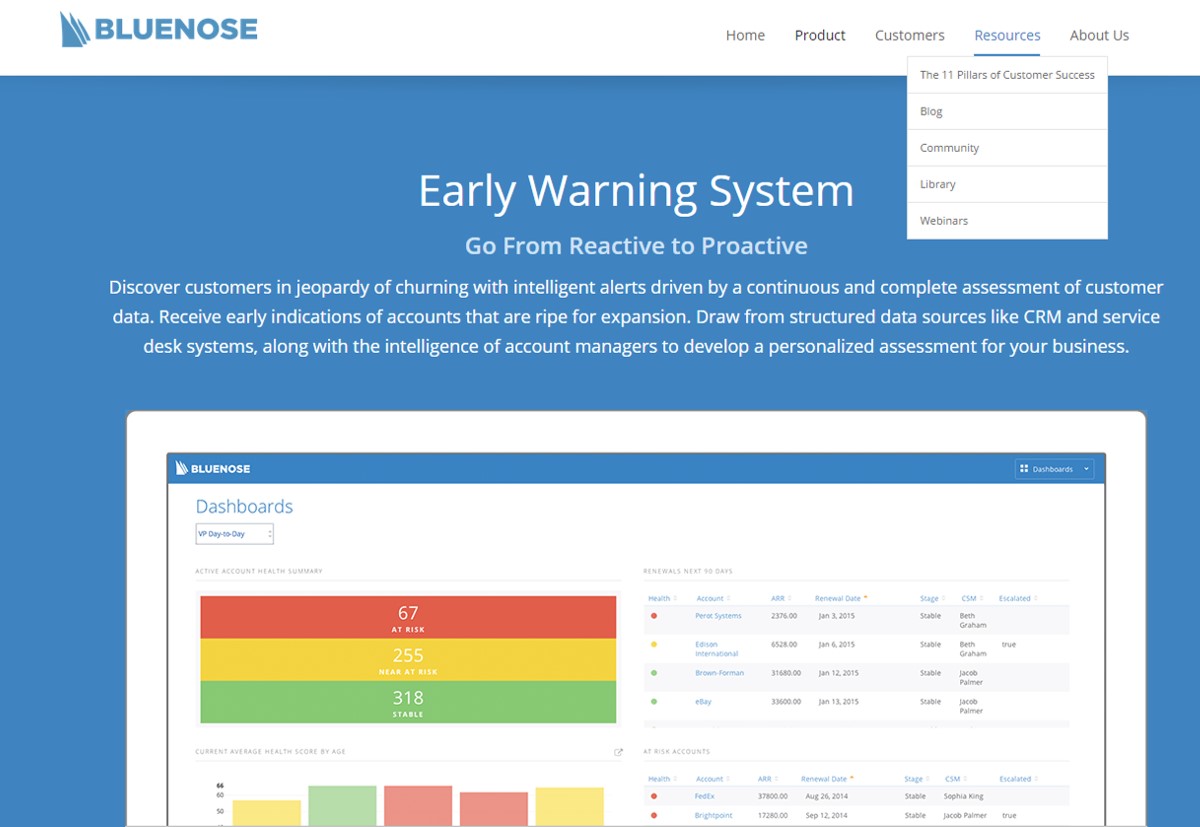
My latest addition to the trend illustrations on Change is an Opportunity is predictive in action and I used Bluenose (below) and Digit to illustrate my point that predictive analytics doesn’t depend on the widespread internet of things or BIG data or sensors necessarily – it’s here today, using very much traditional buckets of data available to many organisations and individuals.Bluenose
And that set me thinking about innovation. A bit like the myth that it is all to do with the lone innovator or maverick genius, the notion that all disruption is massive and immediate is one of those illusions that many suffer from. It’s not that it is ever really stated, just that people believe that the telephone, electricity, the internet suddenly burst on us. You can see it with the debate over driverless cars – the issue is will we or won’t we, or by when. That completely disregards the fact that most people who have cars aren’t all able to change them overnight, or whether we all want or need driverless cars. And, more pertinently to this argument, many, at least those with newer cars, have a large number of the elements of driverless cars already – automated parking, emergency braking, cruise control, lane changing. So with hindsight it might look like a big shift that happened at once but in reality as we look forward it is more likely to be a steady evolution.

And that is just as well because we don’t on the whole adapt well in terms of behaviours to sudden massive disruption. We need to get used to things gradually in most cases. (Gradually here is a relative term when considered against human evolution!). Most of the big potential disruptors that haven’t happened (yet) – wearables being a case in point – are certainly not limited by technology but by behavioural acceptance.  And whilst there is evidence of the use of technology changing how we think I am interested to know whether there is evidence that we are becoming more adaptable – essentially evolving faster in how we approach novel or innovative activities.

Kevin Kelly makes the point when he says that the utility of electricity exploded when we invented many more gadgets, but not the quality (as I am reminded every day when I am searching for a different charger or in a strange room looking for a power socket that isn’t miles from any usable surface). Which feels like a lack of progress somehow – a missed potential or opportunity. And in the great and age old debate as to whether radical or incremental innovation adds more value, suggests that the answer is almost inevitably both . .


Instant feedback

like

I’ve mentioned my website previously – here’s another of my posts related to material on there. This one’s about instant feedback – and from there to instant gratification, the removal of annual appraisals, the contrast in speed of decisions and activity between start ups and established business – all big shifts stemming from a fairly simple behavioural trend – the instant feedback provided by Likes, Shares,Comments on posts, tweets, Facebook, etc.

We’ve always loved feedback – nothing new there! But the scale, spontaneity and range of feedback from social channels has changed this massively – feeding an increasing need for instant gratification – am I being followed or read? is my selfie liked . . .? The interesting issue for me is how well or otherwise this translates into the business world.

The annual appraisal is the obvious candidate and Deloitte are only one of many removing this and replacing it with more frequent and different systems. But what about the distinction between reward, easily (at least on paper) linked to appraisal ratings (of whatever frequency) and recognition. I’ve long been convinced that companies do not understand the difference, and certainly in my experience ways of demonstrating recognition have generally been exhortations to say thank you just in various ways. And more often than not those ways have been confused with reward – the monetary ‘present’ to say thank you for an above average job for example.

But social feedback is primarily about recognition (or it has been to date – I must admit to speculate whether at some future point a shifting balance of privacy and value in data will make likes a genuine currency) and much less about reward. And hence I think businesses have some real issues to contend with in opening up their performance systems to social feedback and similar tools, or in simply assuming that instant feedback can be introduced. Just think how long Dan Pink and others have been talking about the drivers of motivation without much impact on the standard tools of salaries, bonuses, remuneration.  I think therefore we are talking about a much more radical shift than simply changing the performance management process – something more akin to what companies like Netflix are doing in recognising their employees abilities and judgement, and creating an environment in which that deep level of trust underpins performance. Recognition (indeed mutual recognition) then becomes as important if not more than reward. And as the HBR article points out the process starts with who you employ, much further back than performance management.

I would love to see more about recognition – ‘Drive’ talks about mastery, autonomy and purpose – which are very much the individual drivers but to work collectively, to make the business greater than the sum of those individuals, I suspect that the desire, indeed the increasing expectation, of instant feedback will make recognition a key element too – even though I am not sure that we know what it looks like yet.

Have I missed something?

working

I was running a foresight session a few years ago and we were talking about work-life interaction – specifically the use of social media during formal work hours. Perhaps unsurprisingly given the age of the audience there was scepticism (another post perhaps) about the efficiency of this. One of my colleagues said “But things do change – did you think when you started work that you would spend at least 50% of your time each day on email?” Apart from the comment “50%? And the rest!” everyone agreed that email was a nightmare. But . . . email was one channel (although we had face to face, phones as well – having seen off telexes and faxes by then).

Now, let’s see – I’ve got a blog on wordpress, a linkedin page, posts and company page, multiple email accounts, IM, twitter, texts, phone, the odd face to face meeting (!) and now Slack. Along the way I’ve played with Yik Yak, Pinterest and am about to open an Instagram account. And of course various financial sites too. Plus not just powerpoint, but Prezi, Videoscribe and Adobe Voice to help me communicate. And I am well aware that I am not particularly up to date or active in the digital space.

So I am intrigued as to when we stopped moaning about email and embraced so many alternatives. Because on the face of it, it’s more bewildering and difficult to manage these multiple channels than the single email route. (I should perhaps confess that because I had a really long daily commute I never got overwhelmed by email but simple swopped the one evil for the other). Is it really because, as many would have it, we are now in control of all these channels? We can choose whether or not to post, or tweet or to reply? Or have we simply become addicted to digital communication in a way that email never inspired and that control is a delusion? And what are the inevitable consequences of that?

I’m interested because of a parallel track of thinking. When I’m running a foresight session I commonly ask what people think will have disappeared in say 5 years time. There are 2 very common responses – cash and pens. And when we discuss the latter, people begin to think that handwriting might disappear as well. Because in none of the above does snail mail, letter writing appear. And whilst I will confess I do write letters, it is becoming rarer and rarer (and I freely admit my handwriting is getting worse). All of which stems from the ability of almost everyone (but importantly not all) to exchange digital notes. So if we continue down this route what happens to our abilities to communicate? And how do we talk to the ‘have nots’ and ‘choose nots’ of technology?

And what physical consequences are there? Texting thumb is an identified issue as is the hunched neck and shoulder of a mobile addict. It is less these individual consequences that interest me so much as how fast this is all happening. We think of evolution in generations – centuries or millennia, not years or decades. I’m also interested in an updated version of the infinite monkey theorem. If we gave smart phones to monkeys would they develop texting thumb and how fast?

I’m certainly not the first to raise the issue – but I am fascinated by our ability to detest (but become ruled by) one form of digital communication (email) whilst embracing so many others – and interested in the evolutionary experiment we are running!

Always on

clock watching

More for less – it’s been the holy grail of business for years. And yet – sometimes we don’t know it when we see it. Or rather when it’s there – it is the seeing that is the fundamental problem. Trust in management circles has generally relied on seeing what’s going on and reviewing what gets produced. The issue with a knowledge or virtual based economy is that the effective way to work is likely to be remotely, probably mobile and digital in nature, and hence invisible to the watching manager. And increasingly what matters, in a consumer world at least, is experience – it trumps product or service and hence quite often outcome is more important than measureable output.

Why does all of this matter? Work – life balance – how to help people be more productive in work, and yet enjoy life. Mobile devices and enterprise apps are making this increasingly possible but the behavioural and cultural aspects are as ever the most intractable. Or at least they have been to date. For generations comfortable with texting their immediate neighbour rather than conversing, it shouldn’t really be a problem. Like so many things affected by digital we need to reappraise trust, metrics and accountability – after all the research has shown for years that except for mechanical tasks productivity increases with autonomy (Check out Dan Pink on the subject).

So fixing the old issue may be about technology and trust – but what about the new? Do we really understand what working remotely, when it suits you, without an office, really looks and feels like? I’m intrigued by Hoffice, a Swedish start up which is encouraging people to get groups of individuals at their homes – with a structured approach to working with timed breaks, coffee and encouragement to achieve rolled into the package.

As with so many things digital, the technology is only part of the issue – our own instincts and needs, the support and issues of working relationships, the trust and clarity of what good looks like in terms of outputs or outcomes are all key to long term success. And as the Internet of Things takes off I suspect that life is going to change again . . . .

Change is an Opportunity

Change

I love www.pexels.com! This is a really short post – to thank pexels for their wonderful resource and to introduce what I hope will be a useful resource for some people – my new website changeisanopportunity.info. You will find some stuff about me on there but it is really a way of me collating and showcasing stuff on trends that I find interesting, challenging, provocative or just newsworthy. Let me know what you think – particularly if you have suggestions for ways to make it better

Who cares? and Why?

Chain

Thinking about language again I was struck by the word chain – suggesting either a constraint or, as in a bicycle, an enabler and accelerator. It’s that more positive interpretation that started me thinking. Because I’ve been discussing value chains a lot recently and making the mildly depressing discovery that actually a lot of organisations are a good deal more articulate about their supply chain than their value chain. Starting with the question ‘why’ do you do what you do – in association with ‘what’ do you do, frequently elicits the immediate answer ‘to make money / profits / growth’. Further exploration of this usually fleshes this out to get more focus on the customer but this question of why is increasingly fundamental for at least two reasons in my view:

1. The customers view of value is shifting and shifting fast. Think about the impact of collaborative consumption – the sharing economy. The value used to be in owning an asset, that was how you de-risked a business. Now the high growth marketplaces are precisely those without assets – Uber has no taxis, Airbnb no hotels. Borrow my doggy, no dogs. What consumers of these services care about is convenience – how fast, how easy, how relevant.

2. People engage around a purpose or a ‘why’ that resonates with them – either as consumers / buyers or as workers / employees. And frankly for most employees once the immediate ‘I am going to get paid’ question is answered the idea of making money for shareholders (unless you are one of them . . . ) is not the most personally relevant or resonant answer – they want to feel that they are making a difference, or a contribution and that the work they are doing is valuable.

But I do think that question of purpose is getting very confused. I personally think purpose, like innovation and a number of other once quite innocuous and clear words, has become very, very ambiguous. Sustainability is another. We just don’t really have a common language any more. For many people, purpose and sustainability are about ethical issues, or about environmental or social concerns. And the problem there is that they then become emotive – and for those not engaged, divorced from the commercial aspects of the business. But purpose as I’ve suggested as above is integral to the business – it is the essential raison d’etre for being there. And sustainable in the dictionary is defined as ‘able to maintained at a certain rate or level’ which has no specific direction to that rate or level.

Oh the joys of our evolving language . . . .

Unknown territory

road

For many years I drove all over the place, on my own, and I got very comfortable about knowing roughly where I was and roughly where I was going – basically I worked out which big towns I needed to go between and only worried about the detail of my actual destination when I got near to it. I’ve been doing a lot of driving recently with the ‘aid’ of a sat nav – and I’m really struck by the contrast. The  whole route is defined for you from the outset – and if you veer off it (which I am wont to do if I think somewhere looks interesting) the instructions are pretty vehement to get back onto the main road, the direct A-B. And of course sometimes that’s the right thing to do. But I think sat nav is also an analogy for how big business works these days. We have to know, not just where we are going but the whole route to get there. Hence project management, business planning etc. And yet . . . .

The world is becoming increasingly complex – and complexity means that properties (and hence events) are emergent. Not linear, not extrapolatable, not plannable – they emerge from the interplay of forces and drivers. Which means that you might know where you want to get to, but you can’t know the best way to do it. You have to prototype, to experiment – see what works and when it does, do more of it. Where it doesn’t, be quick to close it down and move on. I’m hearing a lot about innovation but innovation seems in many cases to be really project management by another guise – take the chosen ideas, develop them according to the plan, stage gate then, lose (sometimes) the ones that don’t work and follow the plan on the others. It all feels rather sterile and fails to take into account emergent properties – they don’t fit the plan.

So it’s perhaps not surprising that there are many reasons I like the Cynefin framework but one of the most obvious is that it makes this tension really explicit – the VUCA world we live in means that events, actions etc are becoming more (albeit not exclusively) complex rather than complicated or simple – ie the operating environment is moving anti-clockwise from simple through complicated to complex and even chaotic. At the same time my basic understanding of how our brain works suggests that our instincts are all about moving clockwise – taking the complex (unknown and unpredictable) and seeking to map it to things we are already familiar with and hence making it known and predictable. So that gives us an ever increasing tension between the two. And as Dave Snowden points out in the video the real world is a mixture of both – but we do need to be explicit about where we are for any given context and we have to be comfortable with the complex . . .  It’s that lack of comfort with the unpredictable, with the lack of a given route map that I feel instinctively is perhaps one of our greatest risks.

Business or do I mean business?

Busy

Inevitably some of my colleagues are manically busy (most of them in fact) and I was emailing one to say that I hoped their business (‘biz-ee-ness’) was productive when it occurred to me that that was spelt exactly the same way as business (‘biz-ness’). And one of the things that I have noticed now I am spending more time working for myself is that biz-ee-ness is a culture specific to biz-ness – or at least the culture of proving that you are busy all the time is specific to business.

I am relishing the time to think, to research, to post (well I am, even if you aren’t relishing reading them!) and to choose what I work on. I am also realising just how much of what I used to spend my time on was so unproductive. Multiple meetings to discuss what things needed to look like or how they were going to work – which in reality were more about making all those involved feel that they had contributed. Why? Wouldn’t it be more productive for each to contribute something different to the agenda rather than all contributing to the one item?

I am not disparaging my colleagues here – this is not unique to them or the organisation I worked for. It is the way business has productionalised things. We think by introducing hierarchy and project management we have professionalised the process – but in reality we seem to have created an industry – and one where success is not measured by the outcome of whatever the project is for but whether the gantt charts, project plans, action minutes and issues log are up to date. There are people (fortunately not too many) who believe that theirs is the most important job on the project when what they actually do is ring round and chivvy. What happened to trust? What happened to autonomy and initiative? And what happened to just get on and do?

In all of this there is a set of underlying assumptions that what we need to do is a) predictable and plannable in advance, b) unchanged by events as the project moves forward unless something unfortunate (a difficult client, an unforeseen hiccup, a piece of data missing) happens and c) subject to a single, right solution. And increasingly I am just not sure about that . . . . in a VUCA world, there are often multiple options – some better today, some better tomorrow, some better for particular cultures or personalities. And where there is volatility, there will be events which are unforeseen – no one’s fault, no-one missed anything just a genuine shift. Complexity means emergent events and properties – you need to foster the ones that are helpful and constrain those that aren’t – neither particularly easy to plot on the gantt chart in weeks 5 and 6 when you don’t even yet know what the emergent properties are let alone when or how they might manifest.

And then I worry that innovation is increasing the biz-ee-ness in biz-ness. We don’t really seem to consider that innovation in how we work might deliver the best value of all – no, we are more concerned with a new product or even a new business model. So we need to work out how to handle all of that alongside the rest of the day job – find some time to put your idea into the ‘Idea of the month’ scheme or build on someone else’s bright thinking.

And yes, I get that I am lucky and yes, I do have periods when I suffer from biz-ee-ness. But that makes the opportunity to think, to gain insights and to experiment to see what happens all the more valuable.- and raises these interesting questions!

X being an unknown quantity, and spurt being a drip under pressure

direction

An old joke but one that started me thinking about experts and expertise. Do we need experts any more when information is available at the click of a mouse? What is their role as we look forward? Increasingly access to expertise is becoming more transparent, easier and cheaper. Google and similar search engines make finding solutions and answers to known problems or access to those who can help easier. Crowd sourcing solution sites such as Innocentive offer simple, timely and cheap means to access a global audience of solvers (from amateur to truly deep experts) for an ever increasing range of problems. Ideation schemes (whether internal or open innovation ) provide banks of ideas from the incremental to the novel.  Marketplaces and apps offer the opportunity to receive a range of quotes and possible solutions on a pull rather than pushed basis, providing real competition to conventional sales and marketing routes.  And in high growth areas such as app development the rapid change means that an expert will be someone with perhaps 2-3 years experience, not 20.

When I read the Oxford Martin School’s paper on the probability of automation it seemed to me that many of the most likely jobs which could be automated were focused on the type of expertise that relied on knowledge and information – built up over many years. It isn’t really difficult to believe that a supercomputer like IBM’s Watson, with all its capacity and processing power would indeed be more accurate in diagnosis than a doctor (which is not of course the same thing as trusting it more . . . )

So if it is not expertise based on knowledge that is still needed then what else? The security of someone giving you ‘the solution’? I’ve spent a lot of time with experts whose experience leads them time and again to identify the issue and be able to apply solutions from elsewhere to get to the best action plan. My concern there is that in a VUCA world there is no guarantee that the solution that worked last time is the best for today (let alone tomorrow) or even that the underlying problem or question remains the same. Scenario planning and systems thinking are coming back into fashion – no surprise given the complexity of today’s world, but neither of them posits a nice simple ‘one right answer’. So maybe it’s not to give us certainty then.

Most rapid change happens in the B2C environment, driven by individuals and consumers. This offers B2B the ability to identify changes that may subsequently impact the B2B environment. One such is the increasing influence over brands and purchasing by the consumer themselves. The role of ‘people like me’ in providing trusted judgement, the ability to personalise, the focus on experience and resonance (is it cool?) are all drivers of this shift – which is driven by the underlying level of connectivity and transparency (for example reviewing pricing through comparison sites). There are some signs that this degree of ‘pull’ from customers is beginning to be seen in the B2B space. The impact on expertise is that those with problems are not necessarily looking any more to be given a prescribed solution or told what to do. Increasingly people want options, alternatives with a holistic assessment of each and the decision to be clearly theirs – you might look in the shop, but compare prices and buy online. They also want the right level of solution – not always the Rolls Royce or expert one. The latter is particularly pertinent in areas of technology where they can see an ever changing future in which today’s technology will be superseded quickly and where tomorrow’s solution is likely to be quicker, cheaper and more flexible. Whilst none of these trends is new of itself, the depth to which they combine in buyers who are translating their consumer experience to work is definitely new. But lets not forget they also want and need to know what to do.

So perhaps I’m looking at this the wrong way round – perhaps the need is not so much for experts as expertise – expertise which simply comes in a wider and wider range of formats, from the friend who can mend your leaky tap to the app that helps you sleep. From the antiques expert who can tell the fake from the authentic to the algorithm making decisions for you – we simply have more expertise than ever available to us. Now all we need is someone to tell us which is the best one to use . .

Crafts and craftsmanship

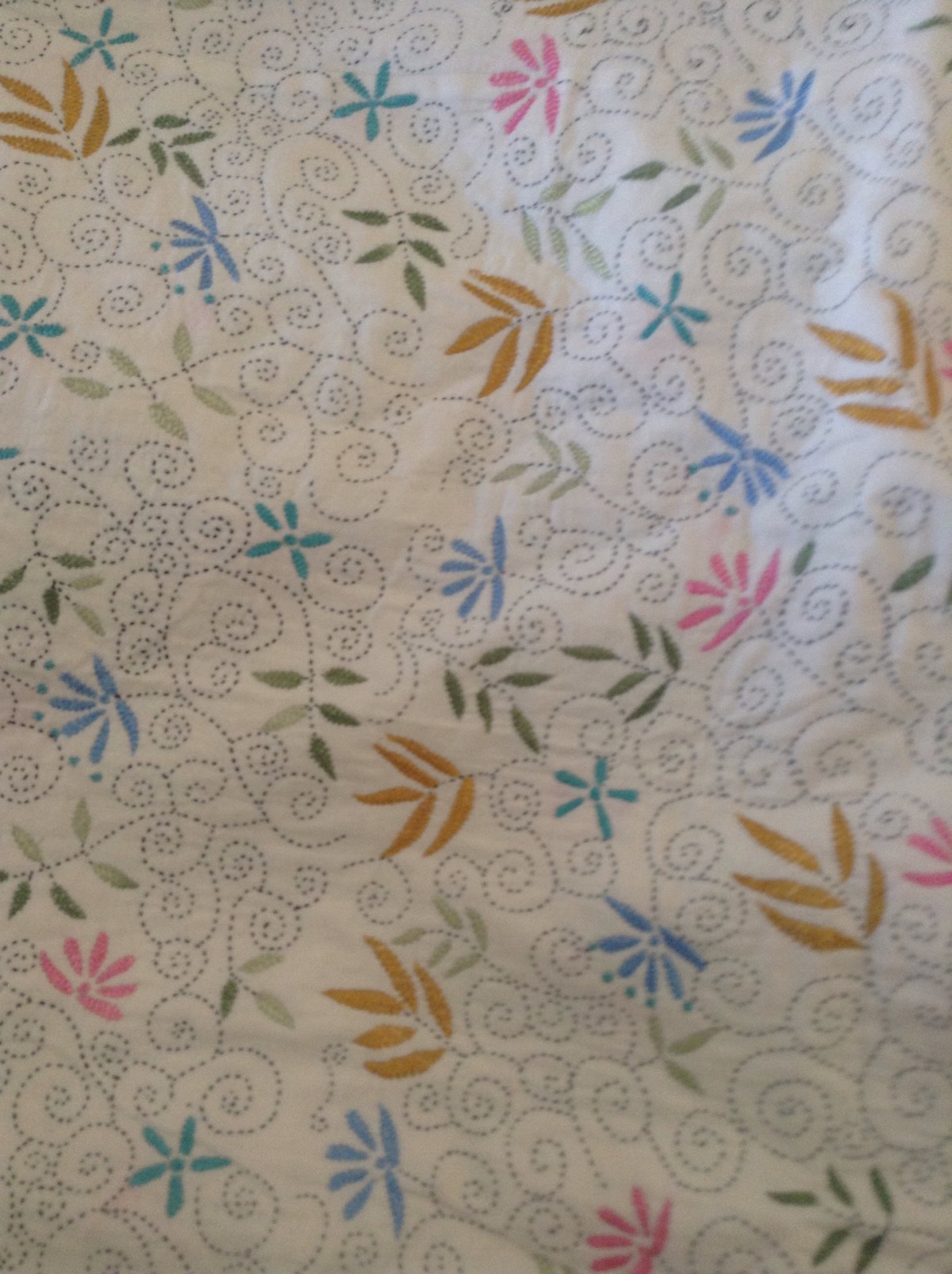
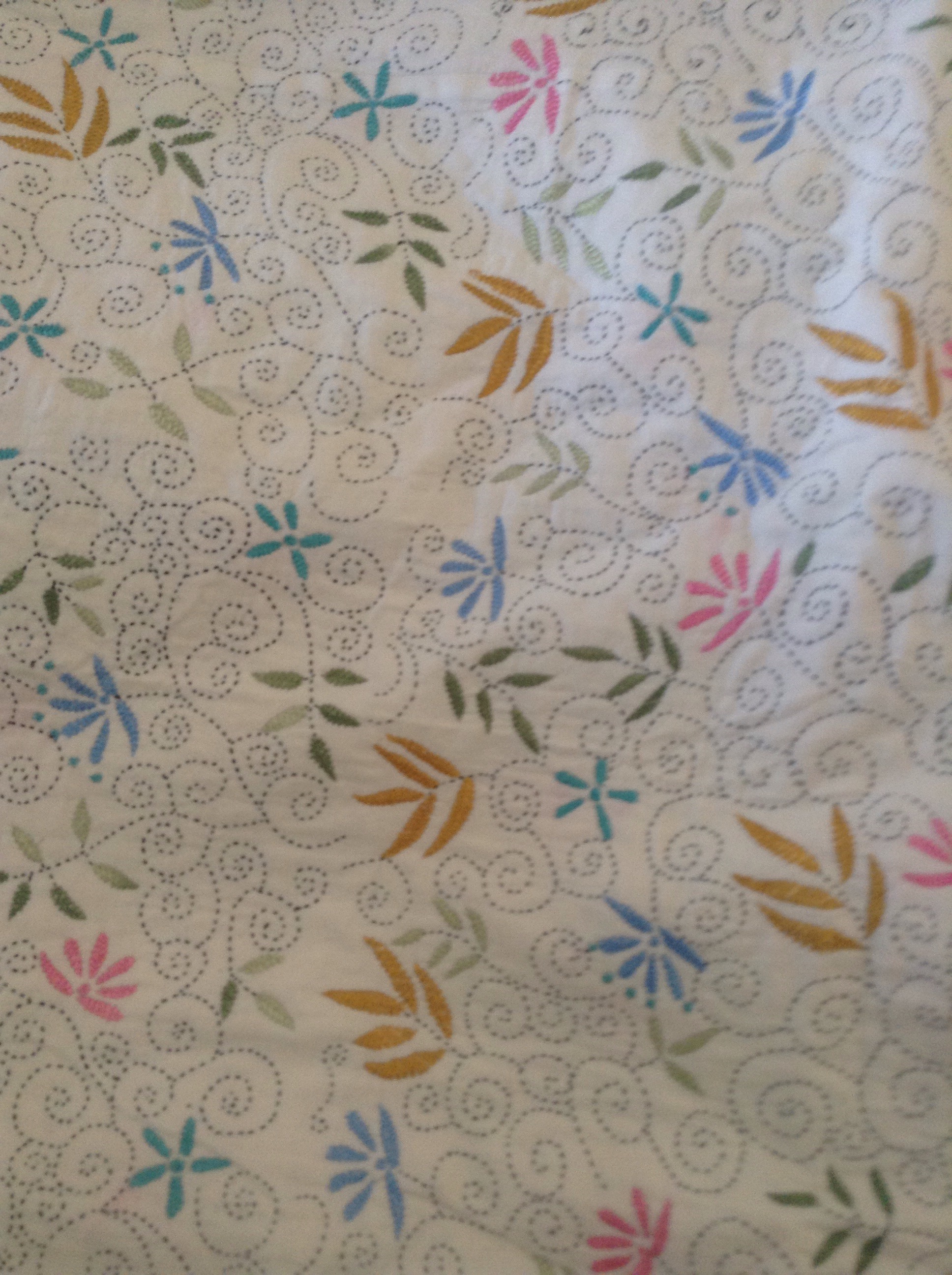
  Last weekend I bought on impulse a beautiful hand embroidered quilt from Sophie Pattinson at the Stansted Garden Show – one of my favourite weekends of the year. Sophie clearly has many motives for what she does but one of them is the development of the craft skills of embroidery. Now craft is alive and well – Etsy is testament to that – but what about craftsmanship? The distinction to me is that crafts are about the production of product (or possibly a service) whereas craftsmanship is the development of the skills to do that – that’s a personal definition so please feel free to argue!
So why am I worrying about the distinction? Well it’s this debate – triggered by this research paper from the Oxford Martin School. There has been a lot of interest and discussion on employment more widely (about which more in a later post I suspect) but the issue of how technology impacts craftsmanship has not featured widely. And yet – much of the luxury market has traditionally depended on craftsmanship – couture, automotive (think Rolls Royce), Swiss watches . . . . it is a long list. And there is the fascinating question of whether new methods of manufacture, especially 3D printing require the development of craftsmanship to take the technique to its full potential . . . before we get to the intriguing question of whether intelligent systems are capable of craftsmanship without human intervention.
Demand for the luxury market and craft products remains high but I am interested in the supply side. Do tech literate Millennials aspire to develop craftsmanship in old skills? When the present generation of craftsman retire will their skills die with them? Or will those skills be replaced by technology solutions in some form? And where does all of this overlap with design (for which technology is already huge)? I thought this was all a cerebral debate in my head, until I heard of a pre-school group running plasticine workshops for their new joiners – toddlers who had spent much time swiping on iPads and phones but who were failing to develop the necessary motor muscles in their hands because they were not gripping and pulling. I then realised that to date at least, making stuff has been an integral need for all of us – even if we don’t all become craftsmen.
The design question is what made me think about 3D printing and the wider Maker revolution. Clearly home made is not only a real possibility for many but an increasing reality. But is that the same as craftsmanship? Is the connectivity of the internet and the sharing of experiences and design today’s replacement for apprenticeships and long mentoring? Will immediate real-time discussion replace patient tutoring? Craftsmanship after all is not always about individualism but about expertise and quality coupled with the innate expert ability to overcome problems along the way – the wood that doesn’t quite do what you need it to, the old watch that needs repairing, the fabric which doesn’t drape quite right. Does this 3D printed fabric replace that need?
And what of intelligent manufacturing? What of the armies of Baxters and the equivalents? Can they learn craftsmanship and the skills that go with it? And if they do, are they then craftsbots? From a different perspective, if robots can paint artistically, could they become craftsmen?
I have so many questions about this – some really philosophical, some much more practical. From my own perspective I was happy to pay a premium for my quilt – partly to support Sophie and her groups in Bangladesh but even more for the beautiful craftsmanship displayed. I suspect that if AI or technology supersedes some of the tasks involved there will still be a premium payable for exquisite work – the danger in my mind is that we simply don’t have the people around the train a new generation – we want the craft but may not have the craftsmanship.